Episode 3: Cultivating Change: African American Homesteaders, Innovators, and Civic Leaders

Black people have long cultivated the land in rural California. And in doing so, they’ve contributed to what we grow and how we grow crops in the state. Discover how early African American farmers and ranchers didn’t just grow crops and raise livestock throughout the Golden State. They also cultivated societal change that helped make California what it is today.

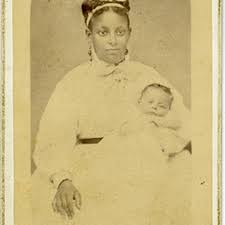
Photo Credit: Portrait of Lucy Hinds with infant, Ernest L. Hinds, circa 1886. Courtesy: Roberts Family Papers, African American Museum and Library at Oakland.

Music Credits for Episode 3: “Strange Persons” by Kicksta; “Summer Breeze” and “Inward” by HansTroost; Over the Water, Humans Gather by Dr. Turtle; and The Fish Are Jumping by deangwolfe.

You can listen online, or better yet, you can subscribe to the podcast so you don’t miss an episode.

Never miss an episode — subscribe today:

Transcript We Are Not Strangers Here Episode 3

Cultivating Change: African American Homesteaders, Innovators, & Civic Leaders

Caroline Collins (Narrator): California often hails itself as the state that most exemplifies the promise of the nation. Or as Kevin Starr, historian and State Librarian Emeritus of California once put it: “California’s future and its promise are nothing less than the future and promise of America.”

It’s a significant narrative that informs the rhetoric of state leaders and culture makers. In other words, from celebrating the state’s tendency towards progressive politics to its multicultural residents to its innovative business landscape and protected natural splendor, California’s mythology is rooted in idealism.

So, we’re going to discuss two issues that are directly tied to the Golden State’s reputation for innovation and progress: Agriculture and Civil Rights. To do so, we’re going to highlight an often overlooked part of state history: the statewide impact that 19th century Black homesteaders made in these pivotal areas.

In doing so, we’ll not only acknowledge that–

(Upbeat folk guitar music)

Susan Anderson: from its inception, Black people have farmed and ranched in California

Caroline Collins: But also, we’ll discover how–

Jonathan Waltmire: California does have a history in relation to civil rights in relation to African Americans they grabbed out opportunity and they made the most of it.  Especially in farming.

Caroline Collins: So, in this episode, we’ll see how early African American farmers and ranchers didn’t just grow crops and raise livestock throughout the Golden State. 

(Music ends)

Caroline Collins: They also cultivated societal change that helped make California what it is today.

(Cal Ag Roots Theme Music, upbeat jazz hip-hop fusion)

Caroline Collins: I’m Caroline Collins and this is the Cal Ag Roots podcast. Cal Ag Roots is unearthing stories about important moments in the history of California farming to shed light on current issues in agriculture. This is the third episode in our We Are Not Strangers Here series. This series, which draws its name from writer Ravi Howard, highlights hidden histories of African Americans who have shaped California’s food and farming culture from early statehood to the present.

This six-part series is also connected to a traveling exhibit with the same name. The exhibit was originally designed to travel throughout California–we printed big, beautiful banners full of all kinds of photos from the archives that accompany the stories we’re telling. But then, the pandemic happened. And so, now we’re digitally reconceiving the We Are Not Strangers Here exhibit so that people can still enjoy it even during the pandemic. It’s not up yet, but we’re working on it. Please check out www.agroots.org for updates.

(Music ends)

PART ONE: AGRICULTURAL INNOVATION

Caroline Collins: California’s known for the bounty of produce that sprouts from its soil. Back in the 19th century, it was often viewed as a land of plenty by settlers looking for land-based opportunity. So much so that it was coined the “Cornucopia of the World” by early advertisers. 

But the reality that many early settlers faced in rural California didn’t always match promises of ‘magical soil’ made famous by advertisements. Much of California is extremely dry. To create the state’s now booming agricultural economy, it took the manipulation of huge amounts of water and the introduction of various crops. And that involved the work of lots of people, including innovative 19th century homesteaders.

Among these pioneering settlers were African Americans who chose not to reside in urban centers across the state. Instead they established roots in rural California, where, like other settlers, they purchased land that had once belonged to Indigenous peoples and was later claimed by the government or private citizens. 

In fact, in our first episode, we dove into the story of one of these early settlers: California 49’er Alvin Coffey. Coffey was an enslaved miner and ranch hand who labored during the Gold Rush not to ‘get rich quick.’ But for his freedom, the freedom of his wife and children, and the future they eventually built in rural California. It’s a fascinating tale filled with iconic pioneer moments. Yet, most Californians have never heard of Alvin Coffey–or, a lot of other Black homesteaders in the state like Alice Ballard and her father John whose homesteads in the Santa Monica Mountains we discussed in our second episode.

So we talked to Susan Anderson, our podcast’s primary History Advisor about why these stories aren’t well known in California history. As the History Curator and Program Manager of the California African American Museum, she’s working to trace the histories of Black homesteaders across the state. And she told us that–

Susan Anderson: Part of what I have observed is that California history was whitewashed.

(Slow tempo, pensive orchestral music)

Caroline Collins: That whitewashing also applies to the history of the state’s 19th century Black homesteaders.

Susan Anderson: The history of their presence in rural California has been suppressed.

Caroline Collins: And that means if official state narratives don’t largely include the stories of Black homesteaders, then the agricultural contributions of these settlers also gets overlooked because–

Susan Anderson: Homesteading is about ranching and farming.

Caroline Collins: So it’s important that we acknowledge their stories. Because archival evidence across the state shows that early Black pioneers worked and lived throughout rural California–often alongside multicultural neighbors. They farmed. They ranched. And many made lasting contributions to what we grow and how we grow crops in the state. 

Like Fresno’s Gabriel Moore who helped make California’s Central Valley the most productive agricultural region in the state.

(Music ends)

–Small pause–

Susan Anderson: Moore was born in 1812 in Alabama. he came as an enslaved person with two men who were sons of the woman who owned him to California in 1853. 

Caroline Collins: Moore was among the thousands of African Americans, both enslaved and free, who trekked to California by wagon train during the 19th century.

(Upbeat guitar folk music)

Susan Anderson: And somehow the accounts don’t reveal how, but he became a free man at some point after arriving in California.

Caroline Collins: Freedom in hand, he and his wife Mary began impacting Central Valley agriculture almost immediately. In fact, by 1857–just four years after his arrival to the state–records list Moore as a Fresno County taxpayer who was beginning to establish a lucrative homestead.

Susan Anderson: He got his wealth through farming and he and his wife are credited with planting the first Apple and fig orchards in Fresno County.

(Music ends)

Caroline Collins: It was a significant decision. Today, 90% of American figs are grown in California, mainly in Fresno County. And domestically, California is the second largest exporter of apples.

However, the Moores’ business endeavors also traveled beyond their orchards.

Susan Anderson: He’s also considered to have been the first African American cattle rancher in California.

Caroline Collins: Their 350 acre ranch was successful enough to impact others in the Valley. For example, the Moores opened their home to boarders, providing other African American settlers a place to work and live as they got on their feet in California. 

And historical records show the Moores didn’t just impact the lives of other Black Californians. They employed white ex-southerners as their herd drivers. And when a group of local White residents wanted to open a dairy, it was The Moores’ that sold them the heads of cattle to give them their start. 

However, in a region where economic success often depends upon the manipulation of water, the Moores’ contributions to local irrigation practices might be their most lasting legacy.

Susan Anderson: They were settled in Centerville and their lands were along that portion of the Kings river. 

(Guitar folk music)

Caroline Collins: Like the larger San Joaquin River, the Kings River begins hundreds of miles away from the Central Valley in glacial lakes nestled atop the Sierra Nevada Mountain Range. From there, this waterway dramatically plummets through deep canyons and waterfalls becoming a corridor of whitewater rapids before finally making its way to the Central Valley where its North Fork joins the San Joaquin River and its South Fork ends at the Tulare Lake Basin. 

The Moores’ homestead was located in a long narrow belt of land in the Valley along the river bottom. And despite the river’s size and strength, in the late 1850s, when they first settled in the area, large-scale irrigation methods weren’t in place.

This was years before the 1887 Wright Act which allowed small groups of farmers to band together to create their own irrigation districts. Together, these groups of famers then took water from major tributaries in the Central Valley like the Merced, San Joaquin, and Kings Rivers. However, before that act, farmers were on their own when figuring out how to irrigate their crops. 

So Gabriel Moore was one of the first settlers ever to divert water from the Kings River, according to the National Park Service. He engineered and built the river’s first rock dam, transferring large stones, rocks, gravel, and earth in order to redirect the waterway. This innovation carried water into a small canal that he then used to irrigate acres of corn and potatoes on his family’s homestead. 

Due to these efforts the Kings River, in many ways, changed the life of the Moore family. Their rock dam helped sustain their lands, crops, and their livelihood. And so we can imagine that Gabriel Moore probably felt a particular affinity with the river that maintained his homestead and a familiarity with a waterway he regularly crossed by horse with his cattle. 

(Music ends)

However, just as the river provided for the Moore family–it also took. Because three decades after settling along the river bottom in the Central Valley, it was the Kings River that actually claimed Moore’s life at the age of 67. 

On May 28, 1880, The Fresno Republican newspaper reported his tragic loss of life with these words, quote: “Gabriel Moore, an old and well known colored citizen, long resident in the vicinity of Centerville was found drowned in the King’s river. On Wednesday, in the company of his hired man he crossed the river to bring over some cattle. 

–small pause–

(Somber orchestral music)

After reaching the eastern shore, they separated. And that was the last seen of him until his body was found. It is conjectured that he attempted to return at the usual crossing, as his horse was found near there, and he must have got entangled in the bridle…”

(Music ends)

Caroline Collins: In the end, though the river took Moore’s life, his manipulation of it had a lasting impact. Susan Anderson reminds us of the significance of his rock dam–the first of its kind along the Kings River. 

Susan Anderson: Part of the reason this is important is not just because it’s a first and that’s something we didn’t know.

Caroline Collins: But it’s also an important part of California history because of the critical role irrigation played in the area’s development

Susan Anderson: Fresno County is the biggest agricultural County in the country. And it has more millions of acres under cultivation, under irrigation than any other part of the Central Valley. 

Caroline Collins: And statewide, California now has nearly 1500 dams, most of them major construction efforts meant to do anything from provide water and electricity to flood control and recreation.

Susan Anderson: So Gabriel Moore and his land and his family and his endeavors were part of this incipient activity that ended up changing everything and that we’re still living with in California.

–reflective pause–

PART TWO: CULTIVATING CHANGE 

Caroline Collins: At the top of this episode we said we were going to discuss Agriculture and Civil Rights–two issues directly tied to California’s reputation as an epicenter of innovation and progress. 

Now at face value, agriculture and civil rights may not seem obviously related. But throughout California history these two issues have intersected, including the many recent and current farmworker movements focused on strengthening workers’ rights in the state and nation. 

However, we can also see this relationship between agriculture and civil rights in the history of Black homesteaders across early California.

So when official state histories exclude the role of 19th century African American homesteaders we don’t just miss out on important agricultural narratives like the innovations of pioneers like the Moores and their Kings River irrigation system. We also don’t get a full sense of California’s civic history. And that means several things. Again, Susan Anderson.

Susan Anderson: It means partly that acts that were committed against Black people were left out. So most Californians do not learn that the first state legislature and the constitutional convention passed laws that forbade African-Americans from testifying in court and from exercising the vote and all sorts of things. 

Caroline Collins: But that’s not all that gets lost.

Susan Anderson: The roles played by Black people are left out as well.

Caroline Collins: That’s an important omission. Because many early Black settlers made critical contributions to civil rights across the state, fighting for the right to vote and other civic freedoms.

And when you think about the fundamental promise of homesteading: the freedom and independence to work the land in order to build a future–often for a family, it’s unsurprising that many of these settlers’ fights for equality often focused on the education of their children.

Susan Anderson: They desired an education. They were eager for their children to be educated. 

Caroline Collins: Since original California law left the question of integration up to individual school districts, many times, desiring an education for their children meant taking matters into their own hands. So in instances where local schools prohibited Black students–

Susan Anderson: They ran their own school. Sometimes they raised money to build a building. Often they used a building that was already a church basement, a home, another kind of building. And they would raise money through subscriptions, dances, fundraisers to pay the teachers and to contribute to the upkeep of the school.

Caroline Collins: Sometimes, these schools were even meant to be mobile. Michele Thompson, great-great granddaughter of 49’er Alvin Coffey, who we talked about in our first episode, recalls family lore about rolling schools.

Michele Thompson: I guess it would be the frontier version of a mobile home, but it was a cabin that was built in such a way that they could roll it from location to location on logs. So if it was out in the field, if it got muddy from the rain, they could move it someplace else and the children had to walk some distance to get there.

Caroline Collins: One such school…would later play a key role in California history.

–reflective pause–

(Guitar folk music)

Caroline Collins: Before we get to this school though, we’re going to back up a bit, to 1873. That year, in Kansas, Lucy McKinney married Wiley Hinds. Lucy was a young woman, just about eighteen years old at the time. Her new husband, Wiley, was a California farmer. So this meant that after their marriage in Kansas, Lucy was going to leave her home state and trek over 1,000 miles to the state of California. We can only imagine how Lucy’s new husband Wiley might have described her soon-to-be new home and wonder if he also painted it as a land of promise like the land advertisers of the time.

Wiley had originally moved to California fifteen years before he and Lucy married. When he first arrived in the Golden State, he immediately started working in the San Joaquin Valley.

(Music ends)

Jonathan Waltmire: So he came out to farm. He didn’t go through the gold rush fields, like many others.

Caroline Collins: Jonathan Waltmire is Tulare County’s lead librarian who oversees the Annie R. Mitchell History Room. Hinds ultimately settled in the area, so the History Room holds a lot of information about him. 

Jonathan Waltmire: He came to Visalia and when he got here, he started working for $30 a month working for a local farmer named Mr. Pemberton. And then he also started being employed by other local farmers. 

Caroline Collins: Soon, he’d saved enough money to strike out on his own.

Jonathan Waltmire: In 1865 he started engaging in the stock business, so that would be cattle, and he had been involved with raising hogs too. And so after he started making money, he ended up buying his own property. 

Caroline Collins: A plot that he added to each year.

Jonathan Waltmire: He bought his first 80 acres and 1868. And then two years later he added 80 more acres. And then he kept accruing more and more property until he had over a thousand acres of land in Tulare County, which is a significant amount of land. 

Caroline Collins: So in 1873, when a young Lucy McKinney Hinds left Kansas with her new husband Wiley, she eventually arrived at his sprawling Farmersville ranch just outside Visalia. 

There, they would make a home and a family. They became actively involved in their community where Wiley Hinds was a leader.

Jonathan Waltmire: He became a very well known figure in Tulare County. He recognized that education was important and in this area, and I think  statewide, there was still a lot of segregation in schools.

Caroline Collins: Wiley Hinds’ son went to a school in Exeter, a town about four miles away from their home. It wasn’t segregated.

Jonathan Waltmire: But the schools in Visalia were.

Caroline Collins: Which makes sense given the fact that, at the time, Visalia was home to many white residents who’d sided with the South in the Civil War. 

Jonathan Waltmire: So he started what was called the Colored School. 

Caroline Collins: And even though their own son wasn’t a pupil at the school, the Hinds family dedicated all sorts of resources to ensure it thrived.

Jonathan Waltmire: At first it was on his property. It was just a barn. And he hired a school teacher from Fresno County who had originally come here from Maine. 

Caroline Collins: In fact, this teacher, Daniel Scott, who was African American, had previously been the private tutor of the Hinds family.

(Upbeat guitar folk music)

Jonathan Waltmire: He paid the teacher to teach the kids who were African American. There were students who were Mexican and there were students who were native American. Then it got to the point where it got large enough where he moved it closer to Visalia. 

Caroline Collins: A move that would indirectly place this school at the center of a California Supreme Court battle, largely due to the efforts of another rural California settler, Edmond Edward Wysinger. 

–reflective pause–

(Music ends)

Caroline Collins: But to understand the court case, first it’s important to understand Wysinger’s story. Like Hinds, Edmond Wysinger was another Black farmer in the state. 

Jonathan Waltmire: Edmond Wysinger was born on a South Carolina plantation in 1816. His father was a Cherokee. And his mother was African American. 

Caroline Collins: Edmond’s original Cherokee last name was Bush. But he later took the name of his German owner: Wysinger. When Edmond Wysinger was 32 years old, he came West.

Jonathan Waltmire: He came out to California for the gold rush.

Caroline Collins: He and his owner came to California by covered wagon, traveling through the perilous Donner Pass before finally arriving in October 1849 at the height of the rush. They originally settled in Grass Valley, California–a small town in the western foothills of the Sierra Nevadas. Wysinger and a group of more than 100 other Black miners, free and enslaved, mined across California’s Mother Lode Gold Belt. In fact, some locations along this belt were given names like Negro Bar due to the presence of these African American miners.

There, in Gold Country, Wysinger toiled for a year as an enslaved miner. Because, as we discussed in our fist episode, though California was technically a free state–slavery was often practiced out in the open as White Southerners rushed into the gold fields with enslaved individuals who, at times, made them small fortunes.

So, under those conditions, Wysinger eventually earned $1,000 in order to buy his freedom. Once free, he began establishing an independent life in California.

(Guitar folk music)

Caroline Collins: Then, he married Penecia Wilson in 1864. She was the daughter of settlers who’d also arrived in Grass Valley by wagon train. The two eventually moved to Tulare County. There, they raised eight children on their family farm. 

Wysinger was a self-educated man and he stressed the importance of education to his children.

So on October 1, 1888, Wysinger took his 12-year-old son Arthur to be enrolled in Visalia’s only public high school. 

(Music ends)

But when they got there, a teacher named Mr. Crookshank denied Arthur admittance. Crookshank told Wysinger to take the boy to the Colored School–the same one Lucy and Wiley Hinds had established. 

Jonathan Waltmire: And so he sued Crookshanks and he sued the schools. 

Caroline Collins: A Superior Court heard the case and sided with the school district. So Wysinger appealed, eventually taking his case to the California Supreme Court.

Jonathan Waltmire: And then in 1890 the California state Supreme court ruled that segregation is not allowed because of his lawsuit. And so his son Arthur Wysinger enrolled in the highest school immediately after the ruling. 

Caroline Collins: It was a legal battle that forever altered the state.

Jonathan Waltmire: For Wysinger, it’s not necessarily that he had a lot of property. For him, his impact is on civil rights. It was very significant that 60 years before Brown vs Board of Education, you have a state Supreme Court saying that schools shall not be segregated. 

–reflective pause–

(Pensive orchestral music)

Caroline Collins: So, in the end, the Hinds and Wysingers didn’t just make an impact locally, they also helped secure essential civil rights at the state level and, in many ways, nationally in terms of ending segregation. Which is important to recognize because it’s the truth, and —

Jonathan Waltmire: If more people knew about them then I think that we’re all the better for it.

CONCLUSION

Caroline Collins: The Hinds and Wysinger families, even years after the court case, continued to make an impact upon the state. For example, a Hinds daughter, Pearl, studied music. She later married newspaper publisher and mortuary owner Frederick M. Roberts of Los Angeles, who in 1918 became the first African American elected to the California State Legislature. 

One of Wysinger’s grandsons served in World War II and one of his granddaughters, Florence Wysinger Allen, became a renowned civil rights activist in San Francisco. And many of the Wysinger family continued farming in rural California. For four generations they grew peaches and grapes in the Black settlement of Fowler near Fresno.  

So as we can see, when we recognize the long history of African American homesteaders in rural California and their many contributions to the state we gain a fuller understanding of California history. 

(Music ends)

Caroline Collins: Alvin Coffey’s great-great granddaughter Michele Thompson frames these stakes this way–

Michele Thompson: We didn’t pop out of the cotton fields. We’ve worked we’ve contributed, we’ve helped build America. 

Caroline Collins: And specifically as farmers and ranchers.

Michele Thompson: When you talk about farmers, it’s not all these White farmers with little White kids out in the cornfield. There are all colors that are there. They’re Hispanic, Black, Chinese, et cetera. They’re all out there in that field and they’re all raising families, you know, and they’re all contributing to the economy.

(Cal Ag Roots Theme Music, upbeat jazz hip-hop fusion)

Caroline Collins: And all contributing to the story of California.

So, African American rural residents like the Moore, Hinds, and Wysinger families made lasting impacts on the state that helped make California what it is today. But it’s important to remember that Black settlers didn’t just cultivate change individually. Some made lasting impacts through collective actions, carving out settlements and communities across the state. Tune into our next episode called “Independent Settlements: Building Black Communities in Rural California” to learn how many Black settlers in rural California went about the work of building communities.

Caroline Collins: Thanks for listening to the Cal Ag Roots podcast. If you liked what you heard, you can check out other stories like this one at www.agroots.org, or on Apple Podcasts. And by the way, if you subscribe and rate this show on Apple Podcasts, it will help other people discover it.

Now some important acknowledgements: We Are Not Strangers Here is a collaboration between Susan Anderson of the California African American Museum, the California Historical Society, Exhibit Envoy and Amy Cohen, myself–Dr. Caroline Collins from UC San Diego, and the Cal Ag Roots Project at the California Institute for Rural Studies. 

Our traveling exhibit banners were written by Susan Anderson, our project’s Primary History Advisor. And this podcast was written and produced by me with production help from Lucas Brady Woods.

This project was made possible with support from California Humanities, a non-profit partner of the National Endowment for the Humanities (Visit calhum.org to learn more), and the 11th Hour Project at the Schmidt Family Foundation.

–End of Episode–

Cal Ag Roots Supporters

Huge THANKS to the following generous supporters of Cal Ag Roots. This project was made possible with support from the 11th Hour Project of the Schmidt Family Foundation and California Humanities, a non-profit partner of the National Endowment for the Humanities.

Episode 2: Hidden Roots: Uncovering the Legacies of African American Homesteaders in California

One of the most impactful ways we come to know about places is through the stories we tell about them. Discover how Black people in rural California have been remembered — and forgotten — in the stories and landmarks that tell the beginnings of the Golden State.

Photo Credit: Farmhand and horse standing next to a shed, c. 1908. Courtesy: Roberts Family Papers, African American Museum and Library at Oakland.

Music Credits for Episode 2: “Strange Persons” by Kicksta; “Petit Gennevilliers (Celesta”) by MagnusMoone; “inward” and “Le Vulcain” by HansTroost. Tribe of Noise licensing information can be found here: prosearch.tribeofnoise.com/pages/terms

You can listen online, or better yet, you can subscribe to the podcast so you don’t miss an episode.

Never miss an episode — subscribe today:

Transcript We Are Not Strangers Here Episode 2

“Hidden Roots: Uncovering the Legacies of African American Homesteaders in California”

(Introspective music)

Caroline Collins (Narrator): Communities in California have deep connections to the places around them. The landscape – mountains, valleys, rivers, ocean -has often dictated where people have settled and how they’ve lived. Communities even go so far as to define themselves by these places. In these cases, they tie their identities to geographic locations through the names they give them and the landmarks they establish. 

But, in order to do all of that, people and communities have to come to know a place first. They may visit a place or look at pictures of it. They might learn about its past. All sorts of things that, in many ways, shape how we all understand who belongs in a place, and who doesn’t. And that’s important–especially if it’s a place you call home.

Ryan Ballard: We have always felt we belonged–my family’s been here for a while and, and I’ve always known that.

Caroline Collins: One of the most impactful ways we come to know about places is through the stories we tell about them. Often, we call those stories history. And that history holds power. 

Susan Anderson: In the United States, we have master narratives that we all learn whether they’re accurate or not.  

Caroline Collins: California’s master narrative revolves around a set of traditional stories about gold-mining 49ers, Spanish missionaries, and westward moving homesteaders. It’s a powerful state mythology that’s generally focused on White male pioneers. 

But this focus ignores the long presence of Black settlers within California. So in this episode, we’re going to discuss one way early African American rural settlers have been written out of state history: through how we acknowledge California’s landscape. And so–

Susan Anderson:  Let’s put first things first. If we’re going to look at history, let’s actually look at history.

(Cal Ag Roots Theme Music, upbeat jazz hip-hop fusion)

Caroline Collins: I’m Caroline Collins and this is the Cal Ag Roots podcast. Cal Ag Roots is unearthing stories about important moments in the history of California farming to shed light on current issues in agriculture. This is the second episode in our We Are Not Strangers Here series. This series, which draws its name from writer Ravi Howard, highlights hidden histories of African Americans who have shaped California’s food and farming culture from early statehood to the present.

This six-part series is also connected to a traveling exhibit with the same name. The exhibit was originally designed to travel throughout California–we printed big, beautiful banners full of all kinds of photos from the archives that accompany the stories we’re telling. But then, the pandemic happened. And so, now we’re digitally reconceiving the We Are Not Strangers Here exhibit so that people can still enjoy it even during the pandemic. It’s not up yet, but we’re working on it. Please check out www.agroots.org for updates.

(Cal Ag Roots Theme Music ends)

PART ONE: HIDDEN ROOTS

Caroline Collins: The natural world is often associated with a sense of timelessness. Which, geologically speaking, makes sense. It can take hundreds of thousands of years for a mountain range to form. And some rivers have been slicing through the earth, forming canyons and throughways, for millions of years.

So, it’s no wonder that when people want to tie themselves to a place, one way they go about it is by connecting themselves to the landscape in how they name it and the stories they tell about it. Stories that often describe who arrived to a piece of the natural world and when–in other words, origin stories that create a sense of rootedness

And California is no different. Throughout its colonial history, folks in power have named and renamed geographic places and features in manners that provide official versions of state history–regardless of accuracy. 

So, to learn more about all of this, we talked to California historian Susan Anderson, our podcast’s primary History Advisor and the History Curator of the California African American Museum. We asked her about the significance of these origin stories–especially as they relate to Black folks in the Golden State.

Susan Anderson: You know, for me telling the stories about African Americans in rural California and urban California too is part of the importance is to reframe. 

Caroline Collins: That’s because when the story of Black people in California gets told, there’s a prevailing framework that often shapes its narrative. But that framework doesn’t provide the full picture. 

Susan Anderson: There is this just generally accepted framework about migration. 

Caroline Collins: And not just any migration. The Great Migration–when between 1915 and 1960, five million Black Americans left the South.

Susan Anderson: –because that’s what we’re saying when we say migration.

Caroline Collins: At first, the majority of these migrants settled in Northern cities like Chicago, Detroit, Philadelphia, and New York. However, later waves of migrants increasingly headed West, choosing to start new lives in Portland and Seattle and urban centers across California like San Francisco, Oakland, and Los Angeles. 

Susan Anderson: So that’s the big narrative. 

Caroline Collins: And while The Great Migration is certainly an important part of California history, it doesn’t fully represent the origins of Black people in the Golden State.

Susan Anderson: Black Americans and people of African descent have been in the state of California before White Americans lived here in any number

Caroline Collins: In fact, Black people have been in California since the onset of Spanish colonization in the 16th century. 

(Slow tempo orchestral folk music)

African sailors and interpreters, both enslaved and free, first arrived in California with Spanish conquistadors. And by the 18th century, they were part of the original settlers, or pobladores, who established cities like Los Angeles, San Diego, Monterey, and San Jose. For instance, in 1781, half of the pobladores that founded the present-day city of Los Angeles were of African descent, and some were of full Black ancestry. And by 1790, one in five California residents was Afro-Latino according to the National Park Service.

The offspring of these settlers would come to be known as Californios–the native born Spanish-speaking descendents of the original Spanish colonists and soldiers in Alta California. And they were mostly of mixed Indigenous and/or African descent. 

(Music ends)

These mixed-race Californios, like Pio Pico, the last governor of Alta California, became the state’s economic and political elite after Mexico gained its independence from Spain in 1821. 

But it’s also important to note that not all 19th century Black settlers in the Mexican state of Alta California were born there. Some immigrated from the United States becoming naturalized citizens of Mexico before California became a U.S. state.

And thousands of Black settlers also came to California later in the 19th century as gold seekers, homesteaders, ranchers, and farmers–all decades before The Great Migration ever began. 

But these stories are too often excluded from California’s master narrative.

Susan Anderson: We’re working on accomplishing just bringing to light, this long standing presence and involvement in, in rural life and in California on the part of African Americans.

Caroline Collins: Because, in many ways, these stories have to do with questions of belonging in the state.

Susan Anderson: At a certain point, the question is, when do you stop arriving? When are you actually there? And when can you look at the world from the point of view of someone who is rooted in a place like California

–Reflective Pause–

Caroline Collins: Despite being left out of some official histories, many Black families in the state recognize and cherish their long-standing presence. 

Ryan Ballard: My name is Ryan Ballard and I am from Los Angeles and my father’s from Los Angeles and my grandfather from Los Angeles and my great grandfather was from Los Angeles. 

Caroline Collins: If you couldn’t tell, Ryan Ballard doesn’t feel like a stranger in California. 

Ryan Ballard: You know, I look like a true Angeleno, a true Californian because I’m here. And many lines before me were here.

Caroline Collins: Generational lines that each make up an important part of the Ballard’s family story. 

Ryan was the youngest of six children born to older parents, and he grew up surrounded by important Black history.

Ryan Ballard: Keep in mind, my father was born in 1924, so I had older parents, you know, but that was normal for me as a kid in elementary school. Everyone else said to me, your parents are old, and I thought, well, Nope, your parents are just young. This is just what I’ve known. 

Caroline Collins: And what he knew was a long line of Ballard Angelinos.

Ryan Ballard: You know, I knew my grandfather was born in 1890 and he knew his father, William, which I don’t know when he was born, but we just always have known it was talked about in our family. Apparently they owned a lot of property and so these were talking about it then just family gatherings. It was talked about all the time.

Caroline Collins: It’s a proud family lineage. For example Ryan’s father, Reginald Ballard, was part of the Tuskegee airmen, a World War II squadron of the first Black American aviators. And after the war, he was a firefighter that helped desegregate the Los Angeles Fire Department. And his father, Claudius Ballard, was a prominent physician who served in World War I. 

So they represented a long and rich Ballard history that, within family lore, stopped with Ryan’s great grandfather, William Ballard–the father of Claudius. It was also a family history that was generally about city folks, people who lived in urban Los Angeles, seemingly far removed from rural California.

But that all changed in February 2009 after the Los Angeles Times published a story about…mapping.

PART TWO

Ryan Ballard: So I don’t know what the opposite would be of coincidence cause I know, I think there are no coincidences. So I’m, I’m at work. I got the newspaper every morning And my father called me 

Caroline Collins: That in itself was notable.

Ryan Ballard: My father does not call me at work. He does not call me because I should be working. And he said, Ryan, I’m looking at the paper. I said, dad, me too. 

Caroline Collins:  They were both reading an LA Times article about the removal of a century-old racial slur from maps of the Santa Monica Mountains. The Los Angeles County Board of Supervisors had changed the name of a local peak from Negrohead Mountain to Ballard Mountain to commemorate a Black pioneer who, in 1880, had settled at its base. The article featured a picture from the early 1900s of the settler who was standing at his homestead. By then, he was an elderly man. He stood, a weathered hat upon his head, with his right arm folded across his chest. His name: John Ballard. 

Ryan Ballard: He said, you know that fellow kind of reminds me of my grandfather. I said, Dad, well, obviously that’s why we’re on the phone, because you know, the Ballard name, it struck a chord clearly, right? 

Caroline Collins: Because Ryan had a hunch that maybe, his family was in some way connected to John Ballard. And that was enough to get him moving.

Ryan Ballard: So I called my sister and I told her to look at the paper. She looked at the paper, she called my sister in law and my sister in law had already contacted the author of that article at the LA times.

Caroline Collins: And things kept happening quickly after that. Because now, more members of the Ballard family suspected that they could be related to that old homesteader in the mountains. So–

Ryan Ballard: We got in touch with the author of the article, which led us to Patty.

Caroline Collins: Ryan is referring to Patty Colman.

Patty Colman: I’m a historian at Moorpark college and I’ve also researched local homesteaders, and the African American community in Los Angeles of the 19th century.

Caroline Collins: In fact, it was Professor Colman’s research on John Ballard that helped bring about the mountain’s official name change.

Work that she came to in a roundabout way.

PART TWO: UNEARTHING LEGACIES

Patty Colman: Before I started my full time teaching career, I was working at the national park service in the Santa Monica mountains national recreation area. And I was asked to do a study on the settlement patterns in the Santa Monica mountains.

Caroline Collins: It was a typical historical study in its focus on early California pioneers.

Patty Colman: Homesteading is the quintessential American symbol, right? Because so many people have in their vision what a homesteader is, what an American is, what a pioneer is…

Caroline Collins: The project also involved a lot of archival work, scanning various government records.

(Introspective music)

Patty Colman: So I was just scrolling through the census data and just getting a sense of who are these people that were living out there in 1900 and scrolling, scrolling, scrolling. 

Caroline Collins: And then, Colman noticed something that caught her attention.

Patty Colman: I saw in the census of family and for race there was an N. 

Caroline Collins: For Negro, meaning it was a Black family.

Patty Colman:  And so that clearly caught me because there just were not many people of color in the mountains at the time. 

Caroline Collins: Colman had come across evidence of an undertold history within the state. And she was intrigued.

Patty Colman: And so when I saw this family, I thought, well, who are they? This is really interesting. So I sort of scrapped the larger study and um, and told people at the park service, you know, I think we need to look at this.

Caroline Collins: This new focus led Professor Colman to further uncover the presence of the Ballard family and their contributions to the community. 

(Slow tempo orchestral folk music)

Caroline Collins: John Ballard, who was formerly enslaved, may have arrived in California as early 1848 according to the oral history of his son William. Then, in 1859, Los Angeles County records show that he married a free Black woman named Amanda. Unlike some rural Black settlers who never fully resided in urban spaces, the Ballards spent a little over two decades in Los Angeles where John worked as a blacksmith, a teamster, and a firewood salesman. Eventually, he earned enough money to homestead 160 acres in the mountains above Malibu. 

Patty Colman: I mentioned this in my article, why did a man who was seemingly quite successful living in downtown Angeles, who owned quite a bit of property, why did he suddenly pack up and move out to this remote area of the mountains? 

Caroline Collins: One reason could have been personal loss. In May of 1871 Amanda died, at just 34, due to complications in childbirth.

But another likely contributing factor to his move were demographic changes in Los Angeles in the late 1870s and early 1880s that impacted the lives of its Black residents.

Patty Colman: We have the land boom in Los Angeles and we’ve got the railroad bringing all these Easterners and mid-westerners and you have a real shift in the population in Los Angeles. And one of the things that I think also really changed was the expansion and hardening of Jim Crow laws coming to LA. And that was not the city John knew when John came here, there, there was opportunity for a Black man.

Caroline Collins: In fact, John was active in Los Angeles civic life. In 1870, he was part of a successful lawsuit that granted Black men the vote in LA County. And two years later, he helped establish First African Methodist Episcopal Church, part of the oldest Black denomination in the country.

Patty Colman: And, and I think what started happening at that time was things changed. So I think that he just left because of that and went out to the mountains.

Caroline Collins: So in 1880, a year after re-marrying a widow named Francis, John packed up and relocated to the Santa Monica mountains. 

There, they established a rural life. They grew crops and fruit. John hunted; and, from time to time, he went into the city to sell firewood and charcoal for extra money. 

Patty Colman: John Ballard had six or seven kids. Alice was the youngest and was the only child left in the family that was still living with them. She attended an integrated school out in the valley.

Caroline Collins: This local mountain school was started by a Ballard neighbor, Mrs. Russell. John’s new wife, Francis, had done some work for Russell in the past, helping to care for her kids when they got sick.

Patty Colman: The Russell children said they used to like to ride out to the Ballard home and, and see what was going on and get some biscuits and things like that.

Caroline Collins: So when Mrs. Russell wanted to open a local school and knew she needed a population threshold to get it opened–

Patty Colman: –it was Mrs. Russell who apparently got some of the Ballard kids to come to the school, um, and essentially, you know, integrated a school and we’re talking 1880s.

Caroline Collins: Alice Ballard attended this school and spent her childhood in the mountains. And when she reached adulthood, she chose to remain there.

Patty Colman: In 1888, she applied for her own homestead as soon as she was about 18. Alice is really an interesting figure to me. By 1900 she’s living in this remote little Canyon by herself with these two children. I mean, her dad wasn’t too far away, but far enough to be out there in the middle of nowhere by yourself.

Caroline Collins: Alice Ballard’s independent life in the mountains above Malibu represents an important part of California history.

Patty Colman: By 1900, most Black women in America were working in other people’s homes, cooking other people’s meals, taking care of other people’s kids. 

Caroline Collins: However, Alice’s autonomy actually follows a larger historical pattern.

(Upbeat orchestral folk music)

The American West offered many African American women a chance at economic independence. They’re not always represented in pop culture products like Hollywood Westerns and dime novels. And they faced barriers like racism and sexism, but scholars that study Black women in the early West say that African American women forged lives across the frontier.

Some ran successful businesses like laundry enterprises and hotels. Others were educators, journalists, stagecoach drivers, nurses, midwives, and even gun-toting mail carriers like Mary Fields who the Smithsonian National Postal Museum describes as fearless since being a mail carrier in the Old West didn’t just mean delivering the mail but also protecting it from quote: bandits, thieves, wolves and the weather as well. And, those weren’t the only dangers African American women faced in the West. In fact, a Black woman named Mrs. Tilghman was killed in California’s first stagecoach robbery when she was just riding in the backseat of the Marysville-Comptonville stagecoach.

But despite these dangers and the uncertainty of what they may have faced on the frontier, many Black women still made the American West their home. For instance, some African American women even chose new lives in the West as mail order brides. These women traveled by wagon and train to meet the Black men who’d arranged for their trips with the help of older African American women that acted as match-makers. 

And across the West, Black women established women’s clubs, churches, and communities. In fact, many were notable philanthropists like Biddy Mason, who was the primary founder of First African Methodist Episcopal Church in Los Angeles. She was once enslaved in Mississippi but won her freedom in a California court and eventually made millions of dollars as a prominent real estate entrepreneur.

And some like Alice Ballard, whose records Patty Colman uncovered, homesteaded. 

Patty Colman: She built her own house. She owns her own land. She’s a homesteader raising these kids. And to me that’s fascinating.

(Music ends)

Caroline Collins: Colman’s fascination with the Ballards led her to publish a study about the family’s seemingly lost history. And one day, after sharing this research at a park service talk for the community, she was approached by a member of the audience.

Patty Colman: A gentleman by the name of Nick Knox came up to me and he said, you know, I live, um, off of Canaan and where I live, there’s a mountain behind us and this is what it’s named. I’ve found on these old records in the neighborhood, it was called this and you know, it was the pejorative, you know, word. And I knew that it had to have something to do with John Ballard and his family because of the close proximity to where it was. 

Caroline Collins: He was referring to Negrohead Mountain in the Santa Monica Mountains. 

(Slow tempo orchestral music)

Its name represented a long history of mapping practices where White residents named local places–hills, lanes, passes–by the racial epithets they associated with nearby Black homesteaders. 

As time went by, sometimes the family names of these settlers were dropped until all that was left were the slurs. 

And these weren’t informal nicknames. In other words, places across the nation like N-word Island and sites using other pejoratives for Black people were listed on official government maps. Nearly 800 of them, according to a 2012 NBC News report.

It’s a practice that also took place across California. For example, portions of the state where Black miners panned for gold bore names like N-word Creek and N-word Bar. In the Mojave Desert, where African American settlers formed a community at the turn of the 20th century, two bluffs were called Pickaninny Buttes. And in rural San Diego County N-word Nate Grade Road referred to Nathaniel Harrison, a formerly enslaved homesteader who built a cabin and raised sheep on Palomar Mountain.

In fact, these names across the state were so prevalent that some early researchers used them to highlight Black people’s long history in California. For example, in 1919 Delilah Beasley, an African American historian and reporter, self-published her exhaustive study The Negro Traiblazers of California. In it she says that these place names quote “attest to the presence of blacks in California.”

–Reflective Pause–

Caroline Collins: In the 1960s, the U.S. Department of Interior began replacing these pejoratives with the term ‘Negro,’ resulting in new maps across the country that featured place names like Negro Ridge, Negro Creek, and in the peaks above Malibu: Negrohead Mountain.

(Music ends)

More than 120 years after John Ballard settled in the Santa Monica Mountains, Patty Colman and a group of local residents set out to commemorate the pioneer’s presence.

Patty Colman: So we got in contact with some other members of the community who were interested in changing the name of the mountain. And then we got the LA board of supervisors involved to ask them to change the name of the mountain.

Caroline Collins: Colman and the others however didn’t want to follow the recent route of many renaming efforts. In some cases, communities decided to give these places more neutral, aesthetically pleasing names. But these new names no longer bore any clear ties to earlier Black settlers. So–

Patty Colman: –then you’re losing the history you’re forgetting that those people were there. 

Caroline Collins: It was a history they wanted honored with the name of the family that had staked out a life on that mountain. So, in 2010, the Board of Supervisors officially changed the name from Negrohead Mountain to Ballard Mountain. 

It was a remarkable way to re-remember the legacy of early Black settlers who contributed to civil rights in the state. 

And then the LA Times covered the story.

Patty Colman: And we said to ourselves, wouldn’t it be great if John Ballard still has descendants in the area and they see this article. 

Caroline Collins: And, as we now know, some folks with the Ballard last name did see the story. And soon–

(Upbeat folk music)

Ryan Ballard:  –our entire family or a good portion of us met Patty at Moorpark college

Caroline Collins: The Ballards and Professor Colman continued to correspond and eventually government records confirmed the family’s hunch. John Ballard…was indeed the father of Ryan’s great grandfather William Ballard.

–Reflective Pause–

Caroline Collins: Years later, in 2018, the Woolsey Fire tore through portions of mountain ranges in Los Angeles and Ventura Counties, burning nearly 100,000 acres of land. It was a devastating natural disaster.

Yet an opportunity suddenly arose out of its ashes. Alice Ballard’s 160-acre homestead, where she’d struck out on her own at just 18, was perhaps now accessible for research.

Patty Colman: So we knew where her homestead was that was patented in 1900. We knew exactly where the land was, but the land was pretty inaccessible. And there were a couple of park service archaeologists who had gone out there years ago to kind of walk it a little bit and just look at the land. So dense you really couldn’t even get through.

Caroline Collins: But after the fire–

Patty Colman: They went back out and lo and behold, I mean it was tragic fire, don’t get me wrong, but if there is something positive that came out of it, that land was now opened up. 

Caroline Collins: So when the Cal State Northridge archaeology department led a formal survey of Alice Ballard’s homestead site, Professor Colman, and members of the Ballard family joined them.

Patty Colman: Not only could you walk it, but you could literally see features that are associated with the home and artifacts just littered on the ground.

Caroline Collins: They watched the survey team excavate all sorts of items:

Patty Colman: The pottery really stuck out because to me it was just embedded right there, exposed in the dirt. It was amazing. 

Caroline Collins: But that wasn’t all that was recovered. 

Patty Colman: There were nails. Um, there were some pieces of glass. There was historic barbed wire. The bricks stamped with Los Angeles pottery and brick company,

Caroline Collins: This was tangible evidence of the lives lived in those mountains. 

(Orchestral folk music)

And they weren’t always easy lives. Even by moving all the way to their rural homestead, the Ballards didn’t fully escape persecution. They were harassed by White neighbors in their mountain home. Their first house was burned down by arsonists. And, for decades, the hill where they carved out a life bore an egregious slur…White people gave it that name, simply because they resented the Ballards’ presence on that mountain.

(Music ends)

Ryan Ballard: It was never intended to be a term of endearment. It simply wasn’t. It was meant to hurt harm, uh, mistreat de-value debunk. And that’s why this story is so important to tell because we have the freedom to discuss it. For many Black people, that was the last word they were called before they were hung and met their maker. 

Caroline Collins: It’s a reality Ryan Ballard is sure that his great-great grandfather John Ballard understood all too well.

Ryan Ballard: So clearly someone, uh, someone’s, uh, wanted to try to devalue his existence. So he had to be a man of strong character just to exist and attempt anything. And not just throw his hands up and just really wilt away and die. He said, regardless of what’s going on, this is what’s available to me. And this is what I’m going to take advantage of.

(Positive and upbeat orchestral folk music for several seconds, then music ends)

CONCLUSION

Caroline Collins: Since we spoke with Ryan Ballard and Patty Colman for this podcast there’s been some exciting news regarding the land Alice Ballard once homesteaded. It’s been purchased and will now be managed by several agencies, including the National Park Service. More excavations and study are planned for this year with the goal of interpreting the site for visitors. 

(Cal Ag Roots Theme Music, upbeat jazz hip-hop fusion)

Early Black California families like the Ballards insisted on their own belonging. Despite various attempts to make Black settlers feel unwelcome, they persisted in demanding and working for equal rights. And a lot of that work took place in rural California in places where Black ranchers and farmers not only impacted the state’s agricultural landscape, but its civic culture too. Tune into our next episode, called “Cultivating Change: African American Homesteaders, Innovators, & Civic Leaders,” to learn about these 19th century African American rural settlers who, in pursuit of their California Dream, became civic leaders that shaped the fabric of the state.

Caroline Collins: Thanks for listening to the Cal Ag Roots podcast. If you liked what you heard, you can check out other stories like this one at www.agroots.org, or on Apple Podcasts. And by the way, if you subscribe and rate this show on Apple Podcasts, it will help other people discover it.

Now some important acknowledgements: We Are Not Strangers Here is a collaboration between Susan Anderson of the California African American Museum, the California Historical Society, Exhibit Envoy and Amy Cohen, myself–Dr. Caroline Collins from UC San Diego, and the Cal Ag Roots Project at the California Institute for Rural Studies. 

Our traveling exhibit banners were written by Susan Anderson, our project’s Primary History Advisor. And this podcast was written and produced by me with production help from Lucas Brady Woods.

This project was made possible with support from California Humanities, a non-profit partner of the National Endowment for the Humanities (Visit calhum.org to learn more), and the 11th Hour Project at the Schmidt Family Foundation.

–End of Episode–

Cal Ag Roots Supporters

Huge THANKS to the following generous supporters of Cal Ag Roots. This project was made possible with support from the 11th Hour Project of the Schmidt Family Foundation and California Humanities, a non-profit partner of the National Endowment for the Humanities.

Episode 1: Freedom Chasers: Early Black Settlers and the California Dream

Thousands of African Americans participated in the California Gold Rush. Some were still enslaved when they did like 49er Alvin Coffey. Join us for Episode 1 to learn more about Coffey’s fascinating tale. 

Photo Credit: Alvin Coffey, Tehama County, c. 1880s. Courtesy of the Society of California Pioneers.

Music Credits for Episode 1: “Strange Persons” by Kicksta; “Petit Gennevilliers (Celesta”) by MagnusMoone; and “Summer Breeze” and “Inward” by HansTroost. Tribe of Noise licensing information can be found here: prosearch.tribeofnoise.com/pages/terms

You can listen online, or better yet, you can subscribe to the podcast so you don’t miss an episode.

Never miss an episode — subscribe today:

Transcript We Are Not Strangers Here Episode 1

“Freedom Chasers: Early Black Settlers and the California Dream”

(Introspective Music)

Caroline Collins (Narrator): If they think about it at all, most people think that Black people who migrated to California moved into booming cities. Many times the assumption is that Black people rejected agricultural labor because of its association with slavery and sharecropping. But African Americans are not strangers to rural California; the culture of cultivating the earth runs deep. For generations, Black settlers have shaped life in agricultural areas of California from as far north as Siskiyou County to Imperial County in the South.

Susan Anderson:  Black people have been farming and working the land since the gold rush era. 

Caroline Collins: In fact, Black folks were in California, long before it became a U.S. state. Take the eighteenth century settlers, who were known as pobladores, that founded the present-day city of Los Angeles.

Patty Colman:  Half of them were of African descent. And so there’s this long history of African Americans that a lot of people don’t know.

Caroline Collins:  So, whether it’s the history of occupation and theft of native lands or the history of the cultivation of lands, Black people are often excluded from these stories. And that’s a problem…

Susan Anderson: …because it doesn’t really tell the truth about African Americans in California, and it doesn’t tell the truth about California.

(Introspective music stops)

Caroline Collins: Truths that, in many ways, have tested the promise of the California Dream.

(Cal Ag Roots Theme Music, upbeat jazz hip-hop fusion)

Caroline Collins: I’m Caroline Collins and this is the Cal Ag Roots podcast. Cal Ag Roots is unearthing stories about important moments in the history of California farming to shed light on current issues in agriculture. This is the first episode in our We Are Not Strangers Here series. This series, which draws its name from writer Ravi Howard, highlights hidden histories of African Americans who have shaped California’s food and farming culture from early statehood to the present.

This six-part series is also connected to a traveling exhibit with the same name. The exhibit was originally designed to travel throughout California–we printed big, beautiful banners full of all kinds of photos from the archives that accompany the stories we’re telling. But then, the pandemic happened. And so, now we’re digitally reconceiving the We Are Not Strangers Here exhibit so that people can still enjoy it even during the pandemic. It’s not up yet, but we’re working on it. Please check out www.agroots.org for updates.

(Cal Ag Roots Music ends)

PART ONE: HERE FROM THE START

Caroline Collins: A lot of what we understand about California comes from iconic stories about hardy pioneers that panned for gold or settled land–folks who manipulated waterways, grew crops, created communities, and forged innovations that continue to define the Golden State.

These are important stories–and how we tell them, is just as important. So much so that that’s the kind of cultural knowledge I studied when earning my doctorate degree and what I continue to examine at UC San Diego. In other words, I research how the history of the American West gets made and remade in places like California. So, this series and its exhibit that accompanies it are one way we’re reincorporating Black stories into California’s historical narrative.

And this is a subject that’s also personal to me as a Black American. One of my favorite family photos is of my great-great grandfather, Robert Fuller. In it, he’s standing in front of his barber shop around Waco, Texas in the 1870s. He’s got a big handlebar mustache across his face and you can also see a saloon next door with all these Black and Brown cowboys gathered in its doorway–a reflection of what the area historically looked like at the time. This mingling of cultures in the American West is something that still fascinates me as a California native where branches of my family have been since the 1930’s. 

Yet, when you look closely at the iconic stories that shape how we view California history, you notice two things: many of these stories take place in rural areas and many of them ignore the long-standing presence of Black settlers. Which means that histories of California’s rural communities are incomplete without acknowledging African Americans. 

So, as we’ll soon discover, Black farmers and ranchers in California have been here from the start. And in many ways, their stories are bound by a common thread: the persistent belief in and pursuit of the California Dream by Black people within the state–even in the face of systemic inequity. 

Caroline Collins: In order to share these stories of rural Black settlers in California, we worked with public historian Susan Anderson, who’s our primary History Advisor for the We Are Not Strangers Here Project. For decades, she’s researched Black history in California.

Susan Anderson: These assumptions that exist that African Americans somehow don’t have anything to do in a place like California, that they don’t have anything to do with the land or the history of the land–that’s just wrong. 

Caroline Collins: As the History Curator and Program Manager of the California African American Museum, Anderson’s working to bring these settlers’ stories to their rightful place in official state history. 

Susan Anderson: If we’re looking at California from 1850 to 1900, the first 50 years of statehood, those accounts don’t include the African American presence by and large in rural California. 

Caroline Collins: It’s a reflection of the period that simply doesn’t align with actual documentation of the time.

Susan Anderson: If you go back and read newspapers or you read court documents or primary source materials from those times, you will find Black people in the record because they lived in rural California. 

Caroline Collins: And they haven’t just existed there.

Susan Anderson: They were noted by their neighbors and they were part of their communities.

Caroline Collins: Many Black Californians actively built their communities, opening schools, working the land, and making sure citizens had equal rights. 

Susan Anderson: So you find them when you go back into history, but that history is not brought into the present.

Caroline Collins: It’s a critical oversight. Because stories of Black farmers, ranchers, and rural residents are key pieces of California heritage. In other words, learning about their long presence doesn’t just fill in an important historical gap. Their stories also help challenge myths about early California and create new narratives about freedom, self governance, and civic culture. 

In fact, Anderson’s own ancestors were among the various Black settlers that made their way to the state in the nineteenth century. 

Susan Anderson: I’m third generation. My great grandparents on my mother’s side arrived in California as young people in the 1890s. I mean, that’s not that early compared to a lot of people. 

Caroline Collins: Some Black families came even earlier, and still call California home. Michele Thompson, another descendant of a nineteenth century settler, spoke to me by phone from her home in Walnut Creek. For years, she’s dedicated herself to preserving her family history. 

Michele Thompson: My name is Michelle Thompson. I am the direct descendant of Alvin Coffey and I am his great great-granddaughter. Our family was established in California as a result of Alvin’s participation in the California gold rush, both as a slave and as a slave earning his freedom.

Caroline Collins: Like many African Americans who arrived in California in 1849, Michele’s great-great grandfather was one of thousands of people from around the world that rushed into the northern California gold fields. However, unlike many settlers, and especially Black settlers, Alvin Coffey left behind a firsthand account of his overland Gold Rush journey.

John Hogan: They were busy living their lives. They weren’t busy documenting their lives. 

Caroline Collins: That’s John Hogan, Education and Gallery Manager of The Society of California Pioneers in San Francisco, which now holds some of Alvin Coffey’s papers. Hogan says that normally, curators and scholars have to cobble together indirect sources in order to get a better sense of the lives of these early pioneers.

John Hogan: Things like marriage licenses,  letters that they received. Letters out from the gold rush, of course, don’t stay in California. So families who kept them are in Boston or New York or whatever…the firsthand experience are often not here.

Caroline Collins: So Coffey’s account? It’s a historical jackpot.

Susan Anderson: First of all, it’s still rare to have testimonies from these Overland journey during this time. 

Caroline Collins: That’s Susan Anderson again.

Susan Anderson: But to have the voice of an African American who traveled Overland to come to California during the gold rush is even more unusual. 

Caroline Collins: And, what a story it is. 

(Slow tempo orchestral folk music)

The California Gold Rush is an iconic tale: at the end of 1848, gold was discovered near Sutter’s Mill, outside modern-day Sacramento. The next year, in 1849, almost 90,000 fortune seekers flocked west. They’re still remembered today as the 49ers.

John Hogan: It speaks to the fervor of gold fever that everyone in the country thought California was the place to get rich

So Alvin Coffey came to California as part of the gold rush in 1849. But he came as a slave. 

(Music ends)

Caroline Collins: Some slaveholders even sent enslaved people to mine for gold in California on their behalf.

John Hogan: He was a slave in Kentucky, and his owner said, well, you know, if everyone’s making money out there, Alvin, you can go out to California, make $1,000, send it back to me and you will be a  free man. He worked very hard and he made $1,000 and he sent it back to Kentucky. And he gets a letter in return for that. 

Caroline Collins: But, it actually wasn’t that simple.

Susan Anderson: Alvin Coffey actually made the journey back and forth from Northern California, to Missouri three times. That’s a remarkable thing because this was the journey that took six months over land.

Caroline Collins: It was even more remarkable given Coffey’s status as an enslaved person. Most African Americans that made their way to California during the Gold Rush were free.

California’s constitution even stated that quote: ‘neither slavery nor involuntary servitude, unless for punishment of a crime, shall ever be tolerated.’ However archives across the state contain evidence that slavery was practiced out in the open.  

White southerners who came to California brought hundreds of enslaved Black people with them. These enslaved individuals weren’t only forced to work in gold mines. They were also hired out for cooking, serving, or other work. Sometimes huge fortunes were built on the backs of this free labor. 

So Alvin was among those attempting to start a new life while still negotiating the vulnerability of bondage.

–Long Pause–

PART TWO: THE DREAM OF CALIFORNIA

(Slow tempo orchestral folk music)

Caroline Collins: Alvin was 26 when he made his first trip to California. 

But his story starts in Kentucky where he was born enslaved in 1822. As a boy he was sold to a new owner who brought him to St. Louis, Missouri, where he was sold again to Dr. William H. Bassett. 

It’s also where he’d eventually meet and marry Mahala Tindall, who was also enslaved. Her owner, who also was her first cousin, was a relative of Coffey’s owner, Dr. Bassett. 

A year into the Gold Rush, Dr. Bassett decided to join the fray. But he was chronically ill, so he decided to bring Alvin along.

Susan Anderson: They made a bargain that Alvin Coffey would be able to buy his freedom with money he earned from the diggings from the gold mines when they got to California.

Caroline Collins: Bargain in place, they left St. Louis for St. Joseph, Missouri to join a wagon train departing for the California-Oregon trail. The journey would take months, so Spring was the earliest they could set off if they wanted to avoid the dangers of snow. 

With Coffey’s wife Mahala weeks away from delivering their fourth child, Coffey and Bassett left St. Joseph at noon on May 5, 1849 along with nearly 80 other men and 20 wagons. Alvin later described the scene in his writings. He wrote that quote “a crowd of neighbors drove through the mud and the rain to…see [them] off.”

But, like many overland journeys of the time, it was a perilous trip. And hard work.

Susan Anderson: It’s his job to watch the oxen. And sometimes he drove one of the wagons

Caroline Collins: The wagon train faced five months of thunder and lightning, dust storms, scorching heat, and rain. Roads were muddy and wagon wheels cracked. Firewood was hard to come by. Many of the oxen died from exhaustion and starvation, which drove some of the men to join other wagons and abandon provisions  right there on the trail. 

The wagon train snaked through present-day Nebraska, Wyoming, Idaho, and Nevada.  It forded fast moving streams, fought with Native Americans defending their lands, and fled a cholera outbreak. Many also got sick with bad colds and coughs, which, back then, could be deadly. 

Another 49’er in their party, Titus Hale, noted Alvin’s various contributions in his own diary*. He mentions Coffey’s suggestion to flee the surge of cholera, how he shouldered his rifle to defend the wagon train, and once even jumped into the “icy” Missouri River to save another traveler from drowning. 

The thing is, Alvin’s tenacity makes perfect sense. Consider the stakes. He wasn’t heading West to California to ‘get rich quick.’ He was traveling for freedom and the eventual freedom of his wife and children.

(Music ends)

Caroline Collins: The wagons reached Nevada by early august. Of their original 20 wagons, only six were left. Dr. Bassett was gravely ill when, almost a month later, they eventually limped into California almost a month later. There, they made their way to the mines of Reading Springs, which is near the present day community of Shasta. Of the original 80 men in their party, only 8-10 made it to this mining camp–Alvin and the still ailing Dr. Bassett were among them.

Here’s Michele Thompson, Coffey’s great-great granddaughter again:

Michele Thompson: Dr. Bassett had gotten sick on the journey and Alvin essentially did all the work when they got to California.

Caroline Collins: And mining was only part of that work. Given the deal he made with Dr. Bassett to purchase his freedom, Alvin spent his evenings washing and ironing clothes for other miners, or repairing their shoes, which earned him $616 in gold dust. Alvin also worked as a laborer in Fremont and harvested hay in Sacramento, where he made $2,000. But all of his earnings went to Bassett. Along with the $5,000 in gold that Coffey mined for him.

Then, a little over a year after arriving in California, Coffey and Dr. Bassett left for home.

Michele Thompson: When they went back, they went by ship, which went to New Orleans.

(Tense Music)

Caroline Collins: Coffey and Bassett most likely took a common steamer ship route from San Francisco to Panama, traveled across the country’s isthmus to the Caribbean Sea. There, they booked passage on another ship bound for Louisiana, a trip that in total could take up to three months, and was supposed to mark the last leg of Alvin’s journey towards freedom. 

When they got to New Orleans, Bassett sent Coffey to the city’s mint to convert their gold dust to coins. But when Alvin returned with the money and handed it over to Bassett–

Susan Anderson: This man reneged on his promise. 

Caroline Collins: And when Alvin objected– 

Susan Anderson: He threatened to sell Coffey in Louisiana, which was the biggest slave market in the country.

Caroline Collins: In the end, Bassett waited until their return to St. Louis. There– 

Michele Thompson: …he decided he was going to sell Alvin. And I guess Alvin had learned a few things about being independent, working hard for your own labor.

Caroline Collins: Bassett claimed that Coffey was a quote: “bad influence on his slaves”. So he sold Coffey to his relative, Mary Tindall, who owned Alvin’s wife Mahala and their children. Coffey’s price: $1000. 

(Reflective music begins)

Caroline Collins: It was a brutal setback. But eventually, Alvin was able to convince his new owners, the Tindall family, to allow him to once again make the trip to California. He promised them that he could earn the $1,000 needed to purchase his freedom. 

Caroline Collins: So, Alvin made the long journey once again. He went back to Shasta County and started digging for gold. He also ran a laundry in Sacramento. He even made money at the Page and Bacon Bank in San Francisco, which was failing. He didn’t have an account there, but he made money by queuing up and selling his place in line to account holders withdrawing their funds. Over time, he was able to save $1,000. And this time, he consulted with an attorney. Then, he sent word to Missouri that he was ready to send his gold…but that he needed to get his emancipation papers first.

On July 14, 1856–Alvin’s 34th birthday–the “Deed of Emancipation of Alvin A. Coffey” was filed in a St. Louis County, Missouri court. 

(Melancholic but hopeful orchestral music)

John Hogan: And we actually are lucky enough to have that letter in our archive. It’s referred to as his manumission paper, and basically it’s a letter from his owner at the time who said, you send us this thousand dollars and you are now free. Um, it’s folded, um, and was clearly kept in a safe place. California was a free state, but he probably still had to show it periodically to show his stature as a free man. 

Caroline Collins: Alvin stayed in California until 1857, continuing to mine and work the land.

John Hogan: He then went on to earn the $3,500. That was the price set for his wife and children. And so he worked for years to get that amount of money.

Caroline Collins: At the end of that year, he returned to Missouri. But, he was forced to wait more than a month to purchase the freedom of Mahala and their five children. Missouri law dictated that enslaved individuals could only be legally freed on two specific days of the year. So, he waited. Again. And finally on Monday, October 26, 1857, their deeds of emancipation were recorded. 

Caroline Collins:  The Coffeys sent their two older daughters to Canada to complete their education, where they lived with Coffey’s mother.  She had fled there years earlier through the Underground Railroad. Then Alvin, this time with Mahala and the rest of his children by his side, made his third and final trek to California, eight years after he’d made his first journey. They settled in Red Bluff. 

Michele Thompson: Now, my great grandmother Ora was the first black child to be born free in Red Bluffs in Shasta County area. 

Caroline Collins: Alvin and Mahala opened a laundry, purchased land, and earned a small fortune producing hay on their turkey farm. And they lived a full life in rural California:

Michele Thompson: And there are so many things when you look at, for example letters that they’ve written and the handwriting of each is so beautiful, so exact. It just shows what Alvin was able to do in terms of getting an education for his children.

Caroline Collins: An education he and Mahala had to fight for because this was a time in California’s history when many public schools prohibited both Native and African American children from attending. And he wasn’t just fighting on behalf of his own children. Susan Anderson explains–

(Music ends)

Susan Anderson: In Shasta County, he and his wife ran a school for native children and Black children into Haven County. He was also involved in what was called the colored school.

Caroline Collins: In fact, Alvin remained an active philanthropist, even into retirement.

Susan Anderson: This was a time when old people’s homes day nurseries for children, all kinds of charitable institutions would not accept, uh, Black people. So Black people built their own. 

Caroline Collins: And Alvin was a big contributor to one of the first Black retirement homes, the Home for the Aged and Infirm Colored People in Beulah, California.

Susan Anderson: His philanthropy was noted by African Americans around the state. And then it turned out as an old man  in the very early 20th century, he was the first resident of the home. And actually that’s where he ended up dying. 

CONCLUSION

(Pensive music)

Caroline Collins: Coffey wrote an autobiography, Book of Reminiscences, which remains one of the only first-hand written accounts of a Black pioneer. And in 1887 he joined the Society of California Pioneers, the organization that now holds his manumission papers, which were a donation from Coffey’s family. At the time, many of the societies founded to commemorate pioneers were made up of white propertied men. But…

Susan Anderson: …because of his relationships with the people he came from Missouri with, they were some of the founders of the society of California pioneers. And he joined as the first African American member. So this is partly why we have some of his testimonials. 

Caroline Collins: In many ways, Alvin Coffey’s tale reflects the complex narratives of opportunity and progress that so often define the Golden State.

John Hogan: His story helps bring out this untold part of the gold rush story, which was opportunity for all, is what it was believed to be. That’s why they call it the California dream. Some people thought it was going to be a great equalizer, everyone was going to get rich. And then you come and you realize society just brings it social issues and ails with it. You know, there’s no books written called the California reality.

Caroline Collins: Alvin and Mahala Coffey’s story is remarkable and filled with all kinds of iconic pioneer moments. Yet their story remains generally undertold in official California histories. Tune into our next episode, Hidden Roots: Uncovering the Legacies of African American Homesteaders in California, to learn more about how Black people in rural California get remembered–and forgotten–in the stories and landmarks that tell the beginnings of the Golden State.  

(Cal Ag Roots Theme Music, upbeat jazz hip-hop fusion)

Caroline Collins: Thanks for listening to the Cal Ag Roots podcast. If you liked what you heard, you can check out other stories like this one at www.agroots.org, or on Apple Podcasts, or anywhere else you get podcasts And by the way, if you subscribe and rate this show it will help other people discover it.

Now some important acknowledgements: We Are Not Strangers Here is a collaboration between Susan Anderson of the California African American Museum, the California Historical Society, Exhibit Envoy and Amy Cohen, myself–Dr. Caroline Collins from UC San Diego, and the Cal Ag Roots Project at the California Institute for Rural Studies. 

Our traveling exhibit banners were written by Susan Anderson, our project’s Primary History Advisor. And this podcast was written and produced by me with production help from Lucas Brady Woods.

This project was made possible with support from California Humanities, a non-profit partner of the National Endowment for the Humanities (Visit calhum.org to learn more), and the 11th Hour Project at the Schmidt Family Foundation.

And finally, special thanks to another Coffey great-great granddaughter Jeannette L. Molson who self-published an account of Alvin’s life with researcher Eual D. Blansett, Jr. Their text helped us tell this story.

–End of Episode–

*Titus Hale actually recorded these reflections of Alvin in an official obituary for Coffey: ​​Institutional Records, “In Memoriam, a biographical sketch of Alvin A. Coffey,” Society of California Pioneer Obituary Notices (San Francisco: Society of California Pioneers, 1903), Vol. 9, 135.

Cal Ag Roots Supporters

Huge THANKS to the following generous supporters of Cal Ag Roots. This project was made possible with support from the 11th Hour Project of the Schmidt Family Foundation and California Humanities, a non-profit partner of the National Endowment for the Humanities.