Seeds Of Change Episode 1

SEEDS OF CHANGE EPISODE 1 “United We Stand: Race, Religion, and the Politics of Food Justice in Black Los Angeles’s Victory Markets.”

In WWII era Los Angeles a young Black preacher, Rev. Clayton D. Russell, and Black businesswoman, Charlotta Bass, launched the Los Angeles Negro Victory Commitee. In doing so, they not only helped plant seeds of today’s food justice movements. They also helped radically alter the political landscape of the city with implications that continue to this day. (Photo Credit: Charlotta Bass [third from right] and Rev. Clayton D. Russell [second from right] with other African American leaders in Los Angeles, 1949. Courtesy of the Southern California Library [Los Angeles, California]).

Seeds of Change Episode 1 features interviews from Dr. Analena Hope Hassberg (Cal Poly Pomona) and Dr. Lorn Foster (Pomona College). It was written and produced by Dr. Caroline Collins (Postdoctoral Fellow at UC San Diego and Cal Ag Roots Producer at the California Institute for Rural Studies) and edited by Li Schmidt (Associate Associate Storyteller and Researcher at the California Institute for Rural Studies).

This project was made possible with support from the 11th Hour Project at the Schmidt Family Foundation.

Archival Audio of Rev. Clayton D. Russell Courtesy of Cal State Long Beach Special Collections and oral historian Sherna Berger Gluck.

Music Credits for Episode 1: “Strange Persons” by Kicksta; “Petit Gennevilliers (Celesta”) by MagnusMoone; “Summer Breeze” and “Inward” by HansTroost, “Tiger Rag” by Friars Society Orchestra; “All American News 10” by William Alexander, E.M. Glucksman, and Claude Barnett; and “Symphony in black—a rhapsody of Negro life” by Duke Ellington. Tribe of Noise licensing information can be found here: prosearch.tribeofnoise.com/pages/terms. Pixabay terms terms of service can be found here: pixabay.com/service/terms/. Library of Congress disclaimers can be found here: http://www.loc.gov/legal/.

Never miss an episode — subscribe today:

THE WELL Landback Conversation with Brittani Orona

This in-depth conversation with Dr. Brittani Orona (Hupa, Hoopa Valley Tribe), Assistant Professor of American Indian Studies at San Diego State University digs into the concept and practice of the Landback movement in California, including the deep history of native resistance in the state (Photo Credit: Klamath River. Photo Courtesy Brittani Orona).

The Well Landback Conversations include interviews with Dr. Brittani Orona (San Diego State University), Nicole Celaya (FoodLink for Tulare County Inc.), and Dr. Keolu Fox (UC San Diego). Its episodes were written and produced by Dr. Caroline Collins (Postdoctoral Fellow at UC Irvine, Affiliated Researcher at UC San Diego, and Cal Ag Roots Producer at the California Institute for Rural Studies) and edited by Li Schmidt (Associate Associate Storyteller and Researcher at the California Institute for Rural Studies).

This project was made possible with support from the 11th Hour Project at the Schmidt Family Foundation.

Music Credits for Episode 1: “Strange Persons” by Kicksta and “Petit Gennevilliers” by MagnusMoone. Tribe of Noise licensing information can be found here: prosearch.tribeofnoise.com/pages/terms. Pixabay terms terms of service can be found here: pixabay.com/service/terms/.

Never miss an episode — subscribe today:

Episode 17: Bringing Justice and Land Equity to Farmers of Color in California

The passage of the Farmer Equity Act, California Assembly Bill 1348, in October 2017 was ground-breaking. For the first time, California acknowledged the racist patterns of systematic discrimination that have been common practice in governmental agricultural institutions which have impacted farmers of color in accessing the most basic thing that farmers need: land. This pattern has deep roots in California farming history through laws such as the Chinese Exclusion Act, the Alien Land Laws, and Executive Order 9066. Recognizing that this history was continuing to play out well into the 21st century, a group of organizers called the California Farmer Justice Collaborative were able to win a victory for farmers of color by passing the Farmer Equity Act. However, four years later, organizers discuss how they see this legislation as just a first step in addressing centuries of land ownership discrimination in California. This podcast was made possible with the support of the 11th Hour Project at the Schmidt Family Foundation.

Photo credit: California Farmer Justice Collaborative.

This story was co-produced by Héktor Luis Calderón-Victoria and Li Schmidt. Podcast editors and collaborators include Caroline Collins and Ildi Carlisle-Cummins. We give special thanks to those interviewed in the episode: Florentino Collazo, Jibril Kyser, Kellee Matsushita-Tseng, Janaki Anagha, and Mai Nguyen.

Audio edits by Li Schmidt. Episode music is by Las Cafeteras and Cal Ag Roots theme music is by Nangdo. Tribe of Noise licensing information can be found here: prosearch.tribeofnoise.com/pages/terms.

Never miss an episode — subscribe today:

Episode 16: The Cal Ag Roots Podcast: Reflecting on 2021 And What’s Next

Join us for this mini-episode conversation between the current Cal Ag Roots Podcast Producer, Dr. Caroline Collins, and former Cal Ag Roots Producer, Ildi Carlisle-Cummins, who is currently the Executive Director of the California Institute of Rural Studies (the parent organization for Cal Ag Roots). Caroline and Ildi reflect on the challenges of producing community-based stories during a pandemic and give a preview of the next Cal Ag Roots episodes that will be aired in the beginning of 2022. This podcast was made possible with the support of the 11th Hour Project at the Schmidt Family Foundation.

Photo: Diana Morales: www.arteesmedicina.com

Audio edits by Li Schmidt and Cal Ag Roots theme music by Nangdo. Tribe of Noise licensing information can be found here: prosearch.tribeofnoise.com/pages/terms.

Never miss an episode — subscribe today:

Community Memory Wall in honor of Don Villarejo


why did I think Don would go on forever? because he did not let an obstacle stand in his way. because he had outrun death already. because there was another groundbreaking study that needed to get done. because there was another know-it-all on a soapbox who could use some extra schooling. because he could teach them humility without humiliating them. because he was a giant at a time when too few giants roam. because he was a mensch, a mentor and a friend. because we who walk in his path might someday inspire another to walk in ours, and on and on.  

— Mark Arax

What are your memories of Don?
Please share them with us in the comments.

Did you miss the CIRS Celebration in Honor of Don Villarejo?

Don’t worry– we captured the whole event on video and you can watch by clicking below. Join the CIRS community in raising $25,000 to carry forward Don’s work!

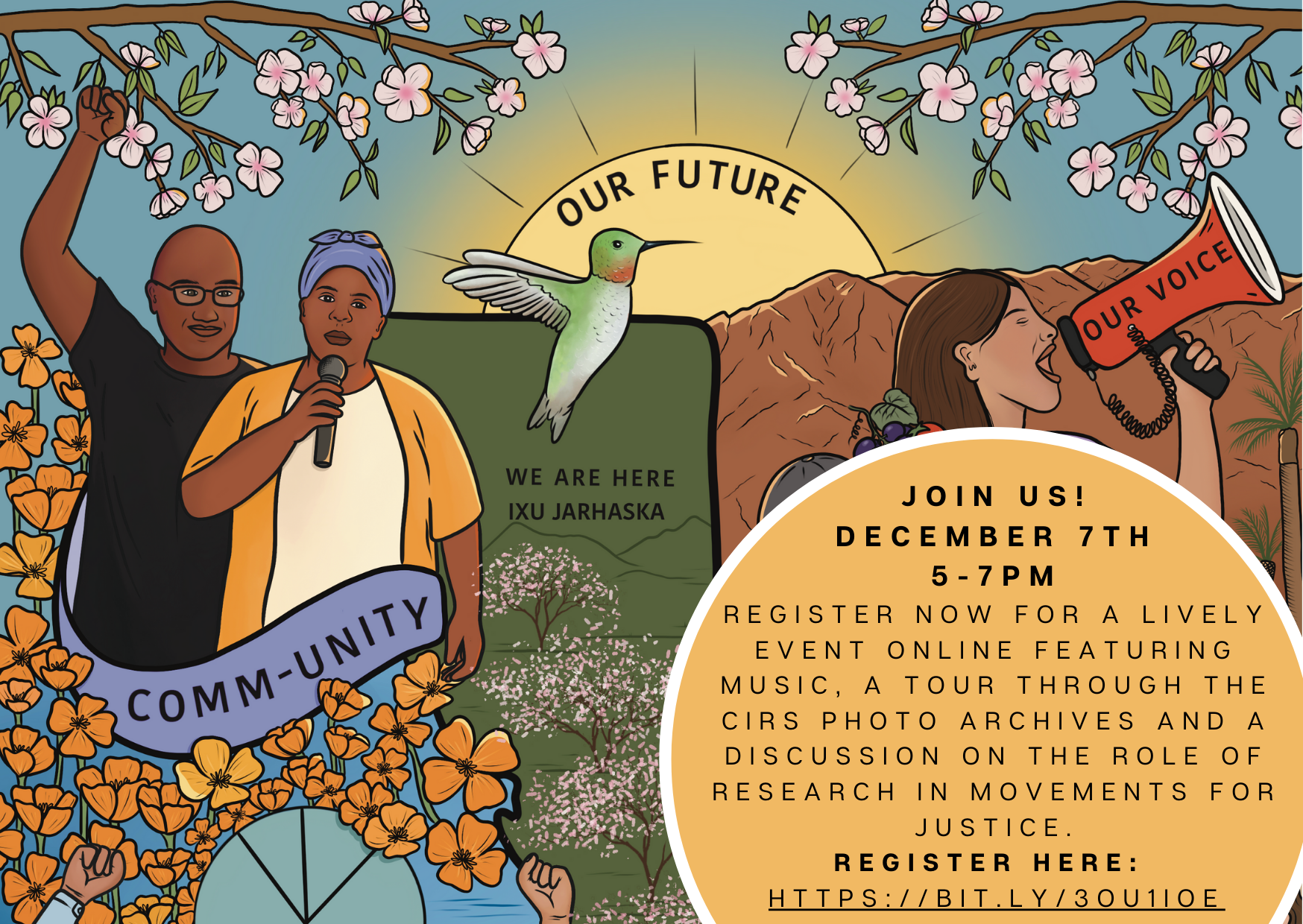
In honor of CIRS co-founder and legendary activist researcher, Don Villarejo, we gathered to celebrate the past, present and future of research for action in Rural California. This online event– which happened on December 7th, at 5:00pm– featured memories of Don’s life and work, music, a tour through the CIRS photo archives– and a discussion on the role of research in movements for justice that includes early CIRS organizers Izzy Martin and Luis Magaña, current CIRS staff, and rural changemakers Oralia Maceda and Nikiko Masumoto.

As Don knew so well and said so often, this work wouldn’t be possible without the support, trust, and power of rural communities. The CIRS community came together to pay tribute to Don’s tremendous work for good– and to celebrate the thousands of seeds of change which he planted and tended through more than eighty years of life.