Episode 15: Water Is Gold: How Central Valley Communities are Still Fighting the Drought

Ahorita lo que estamos viviendo, es que antes pensaban que el oro valía mucho. No. El agua es oro ahorita- ahorita si no tienes agua no puedes producir lo que tienes. 

What we’re learning right now is– before we thought that gold was worth a lot. No. Water is gold now. If you don’t have water you can’t produce what you have. 

–Tomas, resident of East Porterville and water justice advocate

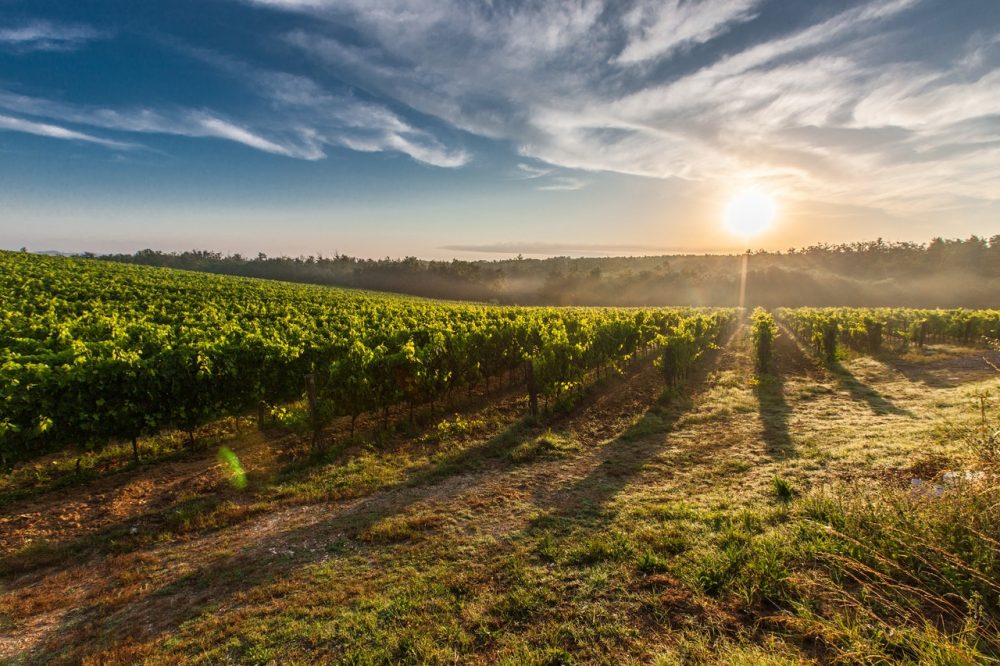
California, the golden state, is known for many things, chief among them is its status as the breadbasket of the nation and the world. Yet, the ability to sustain agriculture and support the communities is limited by access to water. This podcast examines how access to groundwater is influenced by drought and climate change, but also, how the persistence of drought conditions can be tied to histories of human decision-making and structural racism within the Central Valley. 

This story features guest co-producers Dr. Clare Gupta and Cristina Murillo-Barrick; two social scientists on a team of hydrologists, engineers and economists at UC Davis.  As part of a larger National Science Foundation research project, Clare and Cristina partnered with the Community Water Center to collect bilingual narratives of impacted residents who don’t have access to safe and affordable drinking water. They spent time talking with people who live and struggle with these issues every day to learn about experiences, strategies and triumphs related to water justice. They also spoke to leading researchers on California water issues. 

This podcast was made possible thanks to ongoing collaboration with the Community Water Center/El Centro Comunitario por el Agua and funding from the National Science Foundation’s Coupled Natural Human Systems grant.

We would like to extend a special thanks to everyone who contributed. Community narratives feature several Central Valley residents and water justice advocates: Lucy Hernandez, Melynda Metheney, Vergie Nuñez, Cristobal Chavez, Tomas Garcia, Daniel Peñaloza and Susana de Anda. Researchers include Dr. Jonathan Herman, Mark Arax and Camille Pannu. Podcast editors and collaborators include Ryan Jensen and Ildi Carlisle-Cummins. Audio edits by Victoria Boston and podcast and Cal Ag Roots theme music by Nangdo. 

Photo Caption and Credit: Maria Elena Orozco from East Orosi examines a glass of her drinking water, picture taken by Community Water Center

Episode 14: Looking Back to Look Forward: How the US Forgot about Farmworkers’ Right to Retire

Looking Back to Look Forward asks why in California– which has been the home of farm labor movements– aging farm workers are not guaranteed any help in their retirement. The story centers farmworker voices and provides a historical approach to understand why little progress on this important right has been made. We dig into the history of how farm workers were excluded from key protections granted other kinds of workers in the New Deal-era National Labor Relations Act.

This show was co-produced by Jennifer Martinez, in collaboration with Cal Ag Roots. Thanks to the 11th Hour Project for supporting Cal Ag Roots!

We’re excited to introduce you to a new voice on the Cal Ag Roots podcast– Jennifer Martinez. The next few Cal Ag Roots episodes will all be hosted by co-producers who have been working closely with Cal Ag Roots Project Director Ildi Carlisle-Cummins to bring you hidden histories of California farming. 

Here’s how Jennifer describes this podcast episode:

Looking Back to Look Forward unearths important history that is relevant today, as farmworkers are growing older in the fields. Despite this, little attention has been paid to the challenges farmworkers face when they reach their later years. In this episode, I had the privilege to speak with seven farmworkers throughout Kern County and Oregon about their looming retirement plans. Most told me retirement is uncertain and will become another step in their career path, acting as a means for extra income to make ends meet. Most farmworkers lack a pension plan outside of Social Security. Still, about 48 percent of workers do not even qualify for these benefits due to their documentation status. This is unfortunate, given that farmworkers face unique challenges with financial insecurity, meager access to healthcare and essential services, hazardous working conditions, and deteriorating environmental quality. 

Although there have been significant strides to improve the lives of farmworkers, many of the challenges faced today are remnants from Franklin Delano Roosevelt’s 1930’s New Deal policies. Notably, section 152(3) of the National Labor Relations Act did not extend federal protections for overtime pay and the right to unionize to farmworkers and domestic workers, at the time of a predominantly black labor force. Passed at the heels of Jim Crow, Southern Democrats felt giving black workers support to organize, meant their economic systems would be threatened. To pass the deal, Roosevelt had to comply with the Southern Democrats’ anti-black political maneuvers. 

Gutting these core farmworker protections in a food-system that has become global, has made advocating for a just retirement arduous. In this episode, with the great help of storytellers, advocates, and scholars, I explore whether we can make a system that was built on an exploitative arrangement can produce a dignified retirement system. 

We titled this episode “Looking Back to Look Forward” because locating the battle for a dignified retirement requires a multigenerational perspective that unites us in numbers for a common purpose across borders. The struggle for better farmworker retirement is a global fight but is rooted in local experiences and local advocacy strategies. 

As guests on these lands, demanding an equitable path forward means recognizing that where we stand today was shaped by the struggles others took on yesterday. I am indebted to the advocates, scholars, and storytellers that have never let up the fight as truth-tellers. 

I am thankful for the farmworkers that generously let me into their homes. They continue to work diligently to put food on our table, even when they struggle to put food on theirs. Throughout the production of this podcast, I met many farmworkers whose bodies fall to rigorous working conditions, but yet they raise up again. Including my mother, who also suffered a work-related injury. They are the ones who bear the consequences of our political inaction. 

As a product myself of the complicated history of the San Joaquin Valley, I hope this story spurs dialogue on ways we can implement policy to make a dignified retirement a possibility.

Photo is of Lola Martinez, Jennifer’s mom and a farmworker in Bakersfield, CA.

Episode 13: All My Relations — Tending the Land on California’s Central Coast

Stories of California farming history often start at the Gold Rush. Sometimes, they reach back in time to include the Mexican or Spanish eras. But very rarely do we hear about the ways indigenous Californians were tending the landscape to produce food for thousands of years before contact with colonizers. The story of the Amah Mutsun Tribal Band and their stewardship of the land along California’s Central Coast is a crucial part of the history of how humans have interacted with this landscape. What they and other native people across the state have historically done here was NOT farming, they tell me. And yet their stewardship practices literally laid the groundwork for the existing farming industry. It turns out that this story not only stretches the standard timeline of California history back by thousands of years, but it asks us to expand our very definition of agriculture. Which is why it feels like a critically important place to dig in. 

This story features A-dae Romero-Briones, Valentin Lopez, Eleanor Castro, Rick Flores and Nancy Vail, with music by Nangdo, Kai Engel and Ketsa. Big thanks, as always, to Cal Ag Roots supporters, including the 11th Hour Project and California Humanities!

Photo Credit: A-dae Romero Briones. Elderberry harvest.

Meet the 3 New Cal Ag Roots Co-Producers!

In July, 2019, three new storytellers joined the Cal Ag Roots team in response to a spring call-out for stories from rural California. Hektor Calderon, Jennifer Martinez and Erika Ramirez-Mayoral are co-producing stories and will be adding their voices to our podcast stream at the end of the year. We received many response to our call for storytellers and these three new audio producers were selected because of their compelling story ideas. Be sure to subscribe to the show– on Apple Podcasts, Stitcher or wherever you listen– to catch their stories.

Jennifer Martinez (left) is a PhD student studying Public Policy at Portland State University. Ss as an extensive background studying public finance systems in the US and Mexico. Her dissertation explores the connection between remittances and public participation in Mexico. As a daughter to farmworkers and sister of a deported veteran, Jennifer is motivated to connect her advocacy efforts to her scholarly work. He Cal Ag Roots story digs into the history of the National Labor Relations Act to ask why in California, despite being the center of farm labor movements, framworker retirement funds are not guaranteed to provide a fair income to aging workers.

Hektor Calderon (center) was born in Mexico City and grew up in Santa Ana in Southern California. He received a BA from San Diego State in International Business with an emphasis in Management in the region of Latin America and completed an apprenticeship with the UC Santa Cruz Center for Agroecology and Sustainable Food Systems, where he earned an advanced certificate in Ecological Horticulture. Hektor has worked on diversified vegetable production operations both in Northern and Southern California and has also worked with orchard trees both residentially and on small-scale farms. Hektor is the son of immigrants, a protector of food justice, food sustainability and food sovereignty issues. Hektor is working as a Farmer Justice Fellow with the California Farmer Justice Collaborative, based out of the Agricultural and Land Based Training Association (ALBA) in the Salinas Valley. Hektor’s Cal Ag Roots story focuses on the history of exclusionary laws and policies that kept Californian farmers of color from owning land and which led to the fight for equal access to government resources which resulted in the passage of the 2017 Farmer Equity Act.

Erika Ramirez-Mayoral (right) is a Doctoral Candidate in the Department of Communication at UC San Diego, was raised in border towns, Mexicali and El Centro, and is an Imperial and Coachella Valley native. Before coming to UC San Diego she organized alongside young women and parents around education equity and co-founded Raices Girls and Women of Color Network, and Las Nepantleras in Coachella, CA. Her interdisciplinary scholarship and activist work explore the use of oral histories and personal narratives in social justice circles and community development in rural California. She is particularly concerned with the role of counter-narratives in urban planning and public policy. In addition, Erika is interested in the memorialization of space and builds on understandings of community archives and public resources through her work in narrative film and radio projects with various women from the Eastern Coachella Valley. Erika is now a CIRS staff member in the Coachella Valley. For Cal Ag Roots, Erika is exploring the story of Modesta Avila, a young Californio woman who was arrested in 1889 for obstructing the path of the Santa Fe railroad through her family’s property. Avila challenged what it meant to be a citizen and hold land rights at a time when California was becoming part of American– and she has become an iconic figure in the struggle for Southern California land rights.

Episode 12: Digging Deep with Nina Ichikawa

Nina Ichikawa has many identities. She’s the Interim Executive Director at the Berkeley Food Institute, a member of the Farmer Justice Collaborative, a fourth generation Japanese American, as well as a writer about Asian-American food histories. And she’s one of the most insightful thinkers about current issues in California food and farming. Tune in to this Cal Ag Roots episode to find out why Nina wants us all to be telling many more stories about California.

Nina Ichikawa

Episode 11: Digging Deep — A Conversation with Antonio Roman-Alcalá

Antonio Roman Alcalá has a lot of ideas to share about power-building in the food movement. He’s an organizer, and a thinker, a theorizer and a farmer. Antonio strikes me as someone who manages to have his hands in the soil AND his eyes on the horizon at the same time. In our conversation at his kitchen table in his tiny Berkeley apartment, I got the impression that he’s often dreaming of possibilities for a collectively-owned, radically diversified farming future, but that he’s also deeply rooted in and actively drawing from history. Which is why, of course, I was excited to talk with him for this podcast.

Antonio Roman-Alcalá

This podcast is part of our series is called Digging Deep: Conversations with Food Movement Leaders about the History of Farming. Tune in to these episodes to learn how food movement leaders’ understanding of the past, and how what they learn from Cal Ag Roots stories, has shifted their thinking about their work.

Antonio refers to a few Cal Ag Roots stories that you might want to listen to, if you haven’t caught them yet. Those are Podcast 1: There’s Nothing More Californian than KetchupPodcast 2: Can Land Belong to Those Who Work it? and Podcast 10: Política del Mole/ The Politics of Mole. Check those out wherever you get our podcast!